Friday, February 4, 2011
Why Arba'een?
Significance of Arba'een and the Performance of the Ziyarat of Arba'een
Why is so much importance given to the performance of the Ziyarat of Arba’een and the observance of Arba’een (40 days of mourning)?
Ziyarat, as we all know is a visitation, which in essence, is the act of speaking with and visiting our role models. Of course the physical manifestation of the ziyarat is actually being present in Kerbala to perform the Ziyarat of Arba’een, but, in reality, that is not possible for every believer. So does making ziyarat while not in Kerbala give one the same benefits? Ahadith tell us that performing the Ziyarat of Imam Hussain (a.s.) far from Kerbala would hold the same significance as being in the land of Kerbala, as long as the person performing the Ziyarat has truly understood the status of the Imam and seeks to emulate him.
Imam Muhamed al-Baqir (a.s.) states that the heavens wept over Imam Hussain (a.s.) for forty mornings, rising red and setting red. As we complete 40 days of remembrance of our Imam, we re-assert our pledge of obedience and loyalty to him,
“I bear witness that you are the Imam (who is) the upright, the pious, well-pleased (with Allah), the pure, the guide and the rightly-guided.
I bear witness that you fulfilled the pledge of Allah and you struggled in His way…I am a friend of whoever befriends him ...”
By performing the Ziyarat of Arba’een, we pledge that we will continue to follow the path of justice and righteousness and will reject injustice and speak up against the oppressors of the time,
I am an enemy of whoever is his enemy
In essence, we make a promise to continue to mold our lives according to the teaching of Imam Hussain (a.s.).
But why is it that we mourn and remember Imam Hussain (a.s.) for a period of forty days and then move on?
Our Prophet has said, “The earth mourns the death of a believer for forty mornings.” Therefore it appears that the deceased should be remembered and mourned over for a period of forty days. Performing an act for a continuous period of forty days is also known to help one to not just form a habit, but also to carry on the practice for the rest of his life.
If we look at studies dealing with bringing a lifestyle change, we notice the time period emphasized to bring about a change is usually 6 weeks which is about the same time period as 40 days (to be exact it is 42 days).
In the book 40 Days to Personal Revolution: A Breakthrough Program to Radically Change Your Body and Awaken the Sacred Within Your Soul, the author Baron Baptiste explains the significance of forty days:
Why forty days? Because the number 40 holds tremendous spiritual significance in the realm of transformation. Jesus wandered in the desert for forty days in order to experience purification and come to a greater understanding of himself and his mission. Moses and his people traveled through the desert for forty years before arriving at their home in the holy land. Noah preserved the sacredness of life by sailing his ark for forty days and forty nights. According to the Kabbalah, the ancient Jewish mystical text, it takes forty days to ingrain any new way of being into our system….
Reciting particular duas for a period of 40 days is highly recommended in our practices as well.
The unit 40 (forty) is said to be very effective. If a particular Duaa is recited 40 times, or 40 people gather to recite it, or it is recited for 40 days then its effectiveness is highly increased. (Duas.org)
It is reported from Imam Ja'fer Sadiq (a.s.) that whoever recites Dua-e-Ahad for forty days, after morning prayers will be amongst the helpers of the 12th Imam (a). Visitation of the shrine of Imam Hussain (a.s.) as well as Masjid-e-Sahla for 40 consecutive Thursdays is also very highly recommended and is one of the acts that promises a visit from the 12th Imam (ajtf).
Thus, as we perform the Ziyarat of Arba’een and commemorate the Arba’een, 40 days of mourning of Imam Hussain (a.s.), we hope and pray that this forty days of remembrance of Imam Hussain (a.s.), brings about a transformation in us by which we can continue to follow the path of Imam Hussain (a.s.) and carry on his message of upholding justice with true faith and a strong sense of sacrifice!
Refs:
A’maal of Muharram and Safar (Tayyiba Publishers)
Kerbala and Beyond by Yasin T. Al-Jabouri
The Miracle of Ziyarat-e-Ashoora
Commentary on Ziyarat Ashura, translated by Saleem Bhimji from the work of Ali Asghar Azizi Tehrani
Kitab al-Irshad, translated by IKA Howard, authored by Sheikh Al-Mufeed
A’maal of Muharram and Safar (Tayyiba Publishers)
Kerbala and Beyond by Yasin T. Al-Jabouri
The Miracle of Ziyarat-e-Ashoora
Commentary on Ziyarat Ashura, translated by Saleem Bhimji from the work of Ali Asghar Azizi Tehrani
Kitab al-Irshad, translated by IKA Howard, authored by Sheikh Al-Mufeed
Excellence of Hasnain al-Kareemain (as)
1. It is reported that once, Imam Hassan (as) approached Prophet Muhammad - blessings and peace be upon him - and climbed on his shoulders. A person, (who was present) remarked, "O blessed son! What a nice steed you have". In reply, Prophet Muhammad (pbuh) declared, "And how nice a rider (too)." [Sunan al-Tirmidhi, Kitab al-Manaqib, Manaqib Abi Muhammad al-Hasan - Hadith no. 3809, Vol 5, Page 432].
2. Once, when Prophet Muhammad - blessings and peace be upon him - was in ritual prostration Imam Hassan wrapped himself on the blessed back of Prophet Muhammad - blessings and peace be upon him. Due to this, Prophet Muhammad - blessings and peace be upon him - lengthened the ritual prostration so that he (Imam Hassan) would not fall when Prophet Muhammad (pbuh) raised his head. [Musnad Abu Ya'la, Musnad Anas bin Malik, Hadith no. 3415, Vol 3, Page 21].
3. Prophet Muhammad - blessings and peace be upon him - declared: "these two sons of mine are the leaders of the youth in Paradise." [Sunan al-Tirmidhi, Kitab al-Manaqib, Manaqib Abi Muhammad al-Hasan, Hadith no. 3793, Vol. 5, Page 426].
4. Prophet Muhammad - blessings and peace be upon him - has also stated that, "Their friends are my friends, their enemies are my enemies." [Sunan ibn Maja, kitab al-Sunna, Fadl al Hasan wa al Husain, Hadith no. 143, Vol. 1, Page 96].
5. He has also stated that, "these two are the swords of the heavens." He has also stated that, "Hussain is from me and I am from Hussain. May Allah keep him as a friend who keeps Hussain as his friend. Hussain is a grandchild from among grandchildren." [Sunan al-Tirmidhi, Hadith no. 3800, Vol. 5, Page 429].
6. It is stated that once, Prophet Muhammad - blessings and peace be upon him - placed Imam Hussain on his right thigh and his own son, Sayyidina Ibrahim on his left thigh. Angel Gabriel (Jibreel) appeared to him and said, "Allah will not keep them both with the Prophet, choose one of them." Prophet Muhammad - blessings and peace be upon him - could not bear being separated from Imam Hussain and three days later, Sayyidina Ibrahim passed on to the Divine Lord. After this incident, whenever Imam Hussain came in front of him, he used to kiss him and say, 'Welcome to the one for whom I have sacrificed my own son.' [Tarikh al-Baghdad, Vol. 2, Page 200].
7. Prophet Muhammad - blessings and peace be upon him - has also declared that, "They are my sons and the sons of my daughter. O Allah! I have kept them in my friendship; You also keep them in Your friendship and keep him as Your friend who keeps them as his friends." [Sunan al-Tirmidhi, Kitab al-Manaqib, Hadith no. 3794, Vol. 5, Page 427].
8. He advised his blessed daughter Fatimah Zahra (sa), "Bring me both my sons." He used to then smell them and then hug them to his chest. [Sunan al-Tirmidhi, Kitab al-Manaqib, H adith no. 3797, Vol. 5, Page 428].
2. Once, when Prophet Muhammad - blessings and peace be upon him - was in ritual prostration Imam Hassan wrapped himself on the blessed back of Prophet Muhammad - blessings and peace be upon him. Due to this, Prophet Muhammad - blessings and peace be upon him - lengthened the ritual prostration so that he (Imam Hassan) would not fall when Prophet Muhammad (pbuh) raised his head. [Musnad Abu Ya'la, Musnad Anas bin Malik, Hadith no. 3415, Vol 3, Page 21].
3. Prophet Muhammad - blessings and peace be upon him - declared: "these two sons of mine are the leaders of the youth in Paradise." [Sunan al-Tirmidhi, Kitab al-Manaqib, Manaqib Abi Muhammad al-Hasan, Hadith no. 3793, Vol. 5, Page 426].
4. Prophet Muhammad - blessings and peace be upon him - has also stated that, "Their friends are my friends, their enemies are my enemies." [Sunan ibn Maja, kitab al-Sunna, Fadl al Hasan wa al Husain, Hadith no. 143, Vol. 1, Page 96].
5. He has also stated that, "these two are the swords of the heavens." He has also stated that, "Hussain is from me and I am from Hussain. May Allah keep him as a friend who keeps Hussain as his friend. Hussain is a grandchild from among grandchildren." [Sunan al-Tirmidhi, Hadith no. 3800, Vol. 5, Page 429].
6. It is stated that once, Prophet Muhammad - blessings and peace be upon him - placed Imam Hussain on his right thigh and his own son, Sayyidina Ibrahim on his left thigh. Angel Gabriel (Jibreel) appeared to him and said, "Allah will not keep them both with the Prophet, choose one of them." Prophet Muhammad - blessings and peace be upon him - could not bear being separated from Imam Hussain and three days later, Sayyidina Ibrahim passed on to the Divine Lord. After this incident, whenever Imam Hussain came in front of him, he used to kiss him and say, 'Welcome to the one for whom I have sacrificed my own son.' [Tarikh al-Baghdad, Vol. 2, Page 200].
7. Prophet Muhammad - blessings and peace be upon him - has also declared that, "They are my sons and the sons of my daughter. O Allah! I have kept them in my friendship; You also keep them in Your friendship and keep him as Your friend who keeps them as his friends." [Sunan al-Tirmidhi, Kitab al-Manaqib, Hadith no. 3794, Vol. 5, Page 427].
8. He advised his blessed daughter Fatimah Zahra (sa), "Bring me both my sons." He used to then smell them and then hug them to his chest. [Sunan al-Tirmidhi, Kitab al-Manaqib, H adith no. 3797, Vol. 5, Page 428].
Sermon of Lady Zainab (PBUH)
A part of the sermon Lady Zainab (S.A) gave with utmost bravery in the gathering of Yazid in Syria is as follows:
“What you consider today as spoils of war will become ruins for you tomorrow and on that day you will find what you have sent from before. Allah does not oppress his servants. I express my complaint only to Allah and have trust in Him. You may therefore do any treachery that you have, make all your attempts, and try all you can. By Allah, you cannot remove us from the minds (of people), and you cannot fade our message. You will never reach our glory and can never wash the stain of this crime from your hands. Your decisions will not be stable, your period of ruling will be short, and your population will scatter. In that day, a voice will shout: “Indeed may the curse of Allah be upon the oppressors….”.
Tuesday, February 1, 2011
If They Sever our Legs and Hands, We shall Crawl to the Holy Lands!
Several years ago, I met an Australian man who had converted to Islam (and, specifically, to Shia Islam). He told me that, in 2003, he had been watching the news one evening and was astonished by scenes of two million Iraqis streaming towards the holy city of Karbala, chanting: "Hussein, Hussein." For the first time in three decades, in a globally televised event, the world had caught a glimpse of Shia Iraq from the inside.
With the Sunni Ba'athist regime of Saddam Hussein toppled, Australians, like everyone else, were eager to see how Shia Iraqis would respond to a new era of freedom. "Where is Karbala, and why is everyone heading in its direction?" he recalls asking himself. "Isn't Baghdad the capital of the country? Isn't that where all 'the action' is? Who is this Hussein who motivates these people?”. They were the first in a long line of questions that eventually led him to relinquish his Roman Catholic faith and instead embrace Shia Islam.
What he witnessed in that single, 60-second television news report was especially moving because the imagery was unlike any he had seen before. There was something intense about the commotion. A fervent sense of connection turned human pilgrims into iron filings, automatically aligning with each other as they drew closer to what could only be described as Karbala's powerful magnetic field. It was more than intriguing; it was astonishing and inspiring.
Long Trek
In 2007, I travelled to Karbala, my own ancestral home, to find out for myself why such scenes are so captivating. What I witnessed proved to me that even the widest-angle camera lens is too narrow to capture the spirit of this tumultuous, annual Shia ritual. Thousands upon thousands of men, women and children -- but mostly black-veiled women -- filled the eye from one end of the horizon to the other. The crowds were so huge that they caused a blockade for hundreds of miles. I had the privilege of being driven to Karbala in armored vehicles with a police escort throughout the nine-hour journey. But the road was overflowing with pilgrims on foot.
The 425-kilometre distance between the southern port city of Basra and Karbala is a long journey by any measure, and must be unimaginably arduous on foot. It takes pilgrims a full two weeks to complete the walk. Some push their parents in wheelchairs. People of all age groups trudge in the scorching heat of the sun during the day and in the bone-chilling cold at night. They travel across rough terrain, down uneven roads, through terrorist strongholds and dangerous marshlands. Without even the most basic amenities or any travel gear, the pilgrims carry little besides their burning love for "The Master" -- their Imam, Hussein. Flags and banners remind them, and the world, of the purpose of their journey. One banner I saw on my journey read:
O self, you are worthless after Hussein.
My life and death are one and the same,
So be it if you call me insane!
My life and death are one and the same,
So be it if you call me insane!
The message recalled words said to have been uttered by Abbas, Hussein's half-brother, who was also killed in the Battle of Karbala in 680 A.D. while trying to fetch water for his thirst-stricken nieces and nephews.
Hussein, grandson of the Prophet Muhammad, is adored by all Shias. Millions of Sunnis also revere him, as Sayyid ash Shuhada, the "prince of martyrs". He was killed in Karbala on Ashura, the tenth day of the Islamic month of Muharram, having refused to pledge allegiance to the corrupt and tyrannical Ummayad caliph, Yazid.
He and his family and friends were isolated in the desert, starved of food and water and then beheaded. Their bodies were mutilated. In the words of the English historian Edward Gibbon: "In a distant age and climate, the tragic scene of the death of Hussein will awaken the sympathy of the coldest reader." Shias have since mourned the death of Hussein each year, in particular on the days of Ashura and Arba'een. The latter is the Shia holy day of religious observation that occurs 40 days after the day of Ashura. Forty days is the usual length of mourning in many Muslim (and Middle Eastern) cultures. This year, Arba'een falls on Friday 5 February.
Care and Devotion
The horrific bomb blasts of late January and early February in Baghdad and Karbala, which killed dozens and wounded hundreds, illustrate the dangers facing Shias living in Iraq, and the insecurity that continues to plague parts of the country after the war. So it is striking to see so many people -- young and old, Iraqis and foreigners -- making the dangerous journey to Karbala. And it is far from easy to understand what inspires these people. On my own trip, I saw a woman carrying two children in her arms, old men in wheelchairs, a man on crutches, a blind boy holding a walking stick. I met a 46-year-old man who had travelled all the way from Basra with his disabled son. The 12-year-old had cerebral palsy and could not walk unassisted. For most of the trip, the father put the boy's feet on top of his own and held him by the armpits as they walked. It is the kind of story out of which Oscar-winning films are made, but no Hollywood director or screenwriter dares venture into Iraq these days.
One image that never failed to grab my attention was the sight of thousands of tents, with makeshift kitchens and medical clinics set up by the local villagers who live around the pilgrims' path. The tents (called mawkeb, or "caravan") are the only places where pilgrims can find a space to rest from the exhausting journey. More surprising were the people asking pilgrims to join them for food and drink. They intercept the pilgrims' paths to invite them, plead with them and eventually prevail on them to take a short break by the side of the road, without asking for payment. They would say: "Please honour us with your presence. Our masters, bless us by accepting our offerings."
Entire towns in Iraq seemed to shut down as millions converged on the holy city. One local tribal leader -- who, in keeping with Iraqi tribal traditions, bows to no one and is treated by his followers as a king -- was standing on the road, calling out through a loudspeaker: "Welcome, o pilgrims of Hussein. I'll kiss the soles of your shoes. May I be sacrificed for you!"
One image that never failed to grab my attention was the sight of thousands of tents, with makeshift kitchens and medical clinics set up by the local villagers who live around the pilgrims' path. The tents (called mawkeb, or "caravan") are the only places where pilgrims can find a space to rest from the exhausting journey. More surprising were the people asking pilgrims to join them for food and drink. They intercept the pilgrims' paths to invite them, plead with them and eventually prevail on them to take a short break by the side of the road, without asking for payment. They would say: "Please honour us with your presence. Our masters, bless us by accepting our offerings."
Entire towns in Iraq seemed to shut down as millions converged on the holy city. One local tribal leader -- who, in keeping with Iraqi tribal traditions, bows to no one and is treated by his followers as a king -- was standing on the road, calling out through a loudspeaker: "Welcome, o pilgrims of Hussein. I'll kiss the soles of your shoes. May I be sacrificed for you!"
Sacrifice for Truth
Just looking at the crowds leaves you breathless. What adds to the peculiarity of the phenomenon is that, as the security conditions get worse, even more people are motivated, it seems, to challenge the terrorist threats and march in defiance to Karbala. When, days before Arba'een, a female suicide bomber blew herself up after inviting pilgrims to eat in her tent in Alexandria, 45 kilometres south of Baghdad, the crowds turned out in even greater numbers. They chanted in unison:
If they sever our legs and hands,
We shall crawl to the Holy Lands.
And it is not just peasants who take part in this multimillion-man march. There are doctors, engineers, teachers, academics, as well as wealthy entrepreneurs and leading politicians, all of whom participate in what is today one of the biggest annual mass demonstrations in the world. They journey from all over the globe -- Iran, India, Pakistan, Britain, Canada, the United States. This year, the total number of pilgrims visiting Karbala for Arba'een is officially estimated to have reached ten million. Some say that as security improves in Iraq the figure may one day top 20 million.
Seeing the crowds and joining the procession of pilgrims, I was reminded of the questions that my Australian friend had asked himself when he witnessed the Arba'een procession of 2003: "Who is Hussein? And how does he continue to inspire so many people, over 13 centuries after his martyrdom?" For Shias, Hussein is the ultimate moral exemplar: a man who refused to bow in the face of tyranny and despotism. Shias see his martyrdom as the greatest victory of good over evil, right over wrong, truth over falsehood. In the words of the Urdu poet Muhammad Iqbal: "Imam Hussein uprooted despotism for ever till the Day of Resurrection. He watered the dry garden of freedom with the surging wave of his blood, and indeed he awakened the sleeping Muslim nation . . . Hussein weltered in blood and dust for the sake of truth."
Holy of Holies
But why would all these people walk for hundreds of miles to remember a painful event that took place over 13 centuries ago? Visitors to the shrine of Hussein and his brother Abbas in Karbala are not driven by emotion alone. They cry because they make a conscious decision to be reminded of the atrocious nature of the loss and, in doing so, they reaffirm their pledge to everything that is virtuous and holy. The first thing that pilgrims do on facing his shrine is recite the Ziyara, a sacred text addressing Hussein with due respect for his status, position and lineage. In it, the Shia imams who followed him after the massacre in Karbala instruct their followers to begin the address by calling Hussein the "inheritor" and "heir" of Adam, Noah, Abraham, Moses and Jesus.
There is something profound in making this proclamation. It shows that Hussein's message of truth and freedom is viewed as an inseparable extension of that list of divinely appointed prophets. Pilgrims go to Karbala not to admire its physical beauty, or to shop, or to be entertained, or to visit ancient historical sites. They go there to cry. They go to mourn. They go to join the angels in their grief. They enter the sacred shrine weeping and lamenting.
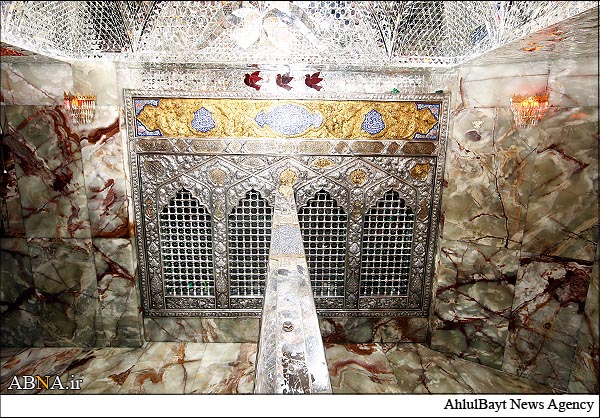
It is as though every person has established a personal relationship with the Imam. They talk to him and call out his name; they grip the cage surrounding his tomb; they kiss the floor leading into the shrine; they touch its walls and doors in the way one touches the face of a long-lost friend. It is a picturesque vista, on epic proportions. What motivates these people is something that requires an understanding of the character and status of Imam Hussein and the spiritual relationship that Shias, and in particular Shia Iraqis, have developed with his living legend.
"Who is this Hussein"? For millions of Shia pilgrims, questions this profound, which can cause a man to relinquish his religion for another, can be answered only when you have marched to the shrine of Hussein for 14 days on foot. The verses of a Shia friend of mine sum it up:
There is something profound in making this proclamation. It shows that Hussein's message of truth and freedom is viewed as an inseparable extension of that list of divinely appointed prophets. Pilgrims go to Karbala not to admire its physical beauty, or to shop, or to be entertained, or to visit ancient historical sites. They go there to cry. They go to mourn. They go to join the angels in their grief. They enter the sacred shrine weeping and lamenting.
It is as though every person has established a personal relationship with the Imam. They talk to him and call out his name; they grip the cage surrounding his tomb; they kiss the floor leading into the shrine; they touch its walls and doors in the way one touches the face of a long-lost friend. It is a picturesque vista, on epic proportions. What motivates these people is something that requires an understanding of the character and status of Imam Hussein and the spiritual relationship that Shias, and in particular Shia Iraqis, have developed with his living legend.
"Who is this Hussein"? For millions of Shia pilgrims, questions this profound, which can cause a man to relinquish his religion for another, can be answered only when you have marched to the shrine of Hussein for 14 days on foot. The verses of a Shia friend of mine sum it up:
The closer I get and when you I'll be seeing,
My emotions take control, with love I begin to shake.
I look at you now and my life has new meaning.
From you some painful beauty with me I must take.
My emotions take control, with love I begin to shake.
I look at you now and my life has new meaning.
From you some painful beauty with me I must take.
O Karbala, I feel what you're feeling,
O land of loving sorrow, O land of heartbreak,
O land where my leader does rest,
Welcome me as a pilgrim, please make me your guest.
By Sayed Mahdi Al-Modaressi (A Shia cleric and chief executive of Ahlulbayt Television Network)O land of loving sorrow, O land of heartbreak,
O land where my leader does rest,
Welcome me as a pilgrim, please make me your guest.
Over 15 Million Shia Pilgrims Throng to Holy Karbala in Arabaeen / Photos
|
(Ahlul Bayt News Agency) - More than 15 million Shia pilgrims thronged the holy Iraqi city of Karbala on Tuesday for annual mourning rituals, with security forces keeping a tight watch following a spate of deadly attacks.
Worshippers continued to pour into the city south of Baghdad for the climax of Arbaeen, mindful that dozens had been martyred in recent days as they made their way there on foot from across Iraq for the ceremonies.
Arbaeen marks 40 days after the Ashura anniversary commemorating the slaying of Imam Hussein (A.S) and his 72 faithful companions, by the armies of the Yazid (L.A) in 680 AD.
Throngs of mourners overflowed Hussein's shrine in Karbala and remorse at not defending him by beating their heads and chests.
Sad songs blared from loudspeakers throughout the city and black flags fluttered alongside pictures of Hussein and his half-brother Hadrat Abbas, both of whom are buried in the city.
Security forces were on alert throughout, following a triple car bombing on Monday killed at least 12 people.
Karbala governor Amal al-Deen al-Har said that over 15 million Shiite pilgrims had been through the city, 110 kilometres (70 miles) south of Baghdad, over the past two weeks.
Mohammad Sadiq al-Har, the head of the city's hospitalities guild, said Karbala's packed hotels and restaurants had catered to 11 million Iraqis and 50,000 pilgrims from 30 other countries.
Security for the pilgrims was paramount, said Muhammed al-Mussawi, head of the provincial council.
"The security plan is flexible and changeable according to the development in the security situation," he said.
"The number of security forces was increased after the latest attacks, and cars were prevented from entering Karbala city," he said.
Monday's car bombs targeted crowds of pilgrims gathering on the outskirts of the city to make the rest of the journey on foot. Another triple car bombing on Thursday killed 45 pilgrims.
"These attacks only strengthen our resolve to commemorate the martyrdom of Imam Hussein," said Mohammed Mohsen, a 40-year-old who came with a convoy of other volunteers with food and drinks to feed pilgrims as an act of devotion.
"These acts will not stop us from practising our religion," he said.
Brigadier General Nohman Dakhel Jawad, commander of Iraq's emergency response forces, said his officers had carried out multiple raids, arresting 32 suspects and uncovering a cache of weapons.
This year marks the first time Iraqi troops have been in sole charge of security for Ashura since 2003. While the Americans have not provided ground forces for it in several years, they have previously helped with surveillance and reconnaissance.
There are around 50,000 US troops still stationed in Iraq, but all of them must pull out of the country by the end of 2011, under the terms of a security pact.
Now-executed dictator Saddam Hussein's regime barred the vast majority of Ashura and Arbaeen commemorations throughout his rule until his overthrow in 2003.
Sunday, January 30, 2011
Wednesday, January 12, 2011
Who are Ahlul-Bayt? (Part I)
Introduction
According to most authentic traditions in collections of both Sunni and Shia,Ahlul-Bayt (People of the House) of the Prophet are one of the two most precious Symbols of Islam after the departure of the Prophet (PBUH&HF). There are numerous traditions in the collection of both schools that the Prophet
(PBUH&HF) has reminded us to stick to these two weighty things (al-Thaqalain), namely Quran and Ahlul-Bayt, in order not to go astray after him.The Messenger of Allah also informed us that these two weights are non-separable and are with each other till the day of Judgment. This requires us that for understanding the interpretation of Quran and the Sunnah of theProphet (PBUH&HF) we should refer to those who are attached to it, namely Ahlul-Bayt.
Knowing exactly who Ahlul-Bayt are, thus becomes a very vital matter when one considers the above tradition of the Prophet (PBUH&HF) as well as many othertraditions which unequivocally state that adherence to Ahlul-Bayt is the only way of salvation. This clearly implies that the one who follows a wrong setof Ahlul-Bayt (!!), will be led astray.
Considering the critical importance of the subject, it will not be surprising to see that the Shia differ from some Sunnis in this subject. In fact, the Sunnis do not have one voice in specifying the Members of the House theProphet. Most Sunnis are in the opinion that the Ahlul-Bayt of the Prophet (PBUH&HF) are:
- Fatimah al-Zahra (AS) (the daughter of the Messenger of Allah),
- Imam Ali (AS),
- Imam al-Hasan (AS),
- Imam al-Husain (AS),
- Wives of the Prophet (PBUH&HF)
Others among the Sunnis further include ALL the descendants of the Prophet to the list! Some other Sunnis are very generous and include all the descendants of Abbas (the Abbasid) as well as the descendants of Aqil & Ja'far (the two brothers of Imam Ali) to the list. It should be noted, however, that there have been some leading Sunni scholars who did NOT consider the wives of the Prophet among Ahlul-Bayt. This happens to be consistent with the Shia point
of view.
To the Shia, the Ahlul-Bayt of the Prophet (PBUH&HF) consist of the following individuals ONLY:
- Fatimah al-Zahra (AS),
- Imam Ali (AS),
- Imam al-Hasan (AS),
- Imam al-Husain (AS),
- Nine descendants of Imam al-Husain (AS).
and including the Prophet (PBUH&HF) himself, they will become fourteen individuals. Of course, at the time of the Holy Prophet only five of them (including the Prophet) were living and the rest were not born yet. The Shiafurther assert that these fourteen individuals are protected by Allah from any kind of flaws, and thus worthy of being obeyed beside Quran (the other Weighty Symbol), and they are the only people who have the full knowledge of the interpretation of the Quranic verses.
In this discussion, we would like to explain why the Shia exclude the wives of the Prophet from Ahlul-Bayt, and also we will briefly discuss why Ahlul-Bayt are protected/infallible. (More detailed discussion on the infallibilityis provided in Chapter 2). We base our proofs on:
1. Quran,
2. Traditions from the authentic Sunni Collections,
3. Historical events.
Evidence From Quran
The Holy Book of Allah mentions Ahlul-Bayt and their exceptional virtue in the following verse which is known as "Purification Verse" (Ayah al-Tat'hir):
"Verily Allah intends to keep off from you every kind of uncleanness O' People of the House (Ahlul-Bayt), and purify you with a perfect purification". (Quran, the last sentence of Verse 33:33)
Note that the word "Rijs" in the above verse has got the article "al-" at its beginning which makes the word universal. Thus "al-Rijs" means "EVERY KIND of impurity". Also at the end of the verse, Allah states "and purify you a PERFECT purification." The word "perfect" comes from the emphasis of
"Tat'hiran". This is the only place in Quran that Allah uses the emphasis of "PERFECT purification".
According to the above verse, Allah expresses his intention to keep Ahlul-Bayt pure and flawless/sinless, and what Allah intends it will certainly take place as Quran itself testifies (see 16:40). Indeed, a human can be sinless because he is not forced to commit sin. It is the human's choice to accept the instructions of Allah and get His help to avoid sin, or to neglect Allah's commandments and commit the sin. Allah is advisor, and encourager, and warner. A sinless human is still a human; no doubt about it. Some people assert that in order to be human, one SHOULD have some mistakes. Such claim is unsupported. The truth is that Human CAN make mistakes but he does not have to.
It is the Grace of Allah that attracts His servants towards Him, WITHOUT compelling them any way. This is our choice to pursue this attraction and refrain from doing mistakes, or to turn away and commit the mistakes. However, Allah has GUARANTEED to show the Right Path and to provide a pure life for those who seek it:
Whoever works righteousness man or woman and is faithful, We shall revive a PURE life for him. (Quran 16:97)
And whosoever keeps his duty to Allah, Allah will appoint a way out for him. (Quran 65:2)
It is worth mentioning the sentence of Quran in verse 33:33 which is related to purification of Ahlul-Bayt, has been placed at the middle of verses related to the wives of the Prophet (PBUH&HF), and this was the main reason why some Sunnis include the wives of the Prophet in Ahlul-Bayt. However, the sentence related to Ahlul-Bayt (given above) distinguishes itself from the sentences before and after it with a clear distinction. The sentences before and after, use only feminine gender which clearly shows they are addressing the wives of the Prophet (PBUH&HF). However, in contrary, the above sentence uses only masculine gender which is a clear indication that that Quran is
changing the individuals who is referring to.
People who are familiar with Quran to some extent, know that such a sharp change of addressee is not a weird-thing, and it has been applied to several places in Quran. For instance we read in Quran:
"O Joseph! pass this over and (O wife of Aziz!) ask forgiveness for your sin, for truly you have been at fault."(Quran 12:29)
In the above verse, "O wife of Aziz" has not been mentioned and the address to Joseph (AS) looks to continue. However the transition of the address from masculine gender to feminine gender clearly shows that the second sentence is addressing the Aziz's wife and not Prophet Joseph (AS). Notice that both sentences are WITHIN one verse. Also note the immediate change of addressing from Aziz's wife to Joseph and again back to the wife in verses before verse 29 and also WITHIN that verse.
In Arabic language, when a group of women are being addressed, feminine gender is employed. However, if only one man exists among that group, masculine gender is used instead. Thus the above sentence of Quran clearly shows Allah is referring to a group other than the wives of the Prophet,
using masculine gender, and that group includes some male members.
From the verse 33:33 alone, we can not conclude that the wives of the Prophet are not included in Ahlul-Bayt. This latter claim can be proven by the authentic traditions of the Sunnis from Sihah Sittah in which the Prophet mentioned who Ahlul-Bayt are; and also by comparing the specifications of
Ahlul-Bayt given in the verse of Quran with the behavior of the some of the wives of the Prophet mentioned in Sihah Sittah to prove the contrary.
What can be understood from the verse ALONE is that Allah is changing His address (which was exclusively the wives of the Prophet at the beginning of the verse) to some people who include some male members, and may or may not include the wives of the Prophet.
Authentic Traditions
It is interesting to see that both Sahih Muslim and Sahih al-Tirmidhi as well as many others confirm the Shi'ite point of view explained above. In Sahih Muslim, there is a chapter named "Chapter of Virtues of the Companions". Inside this chapter, there is a section called "Section of the Virtues of the Ahlul-Bayt of the Prophet". There exists ONLY ONE tradition in this section, and this tradition has no reference to the wives of the Prophet (PBUH&HF). The tradition is known as "The Tradition of Cloak/Mantle" (Hadith al-Kisaa), and is as follows:
Narrated Aisha:
One day the Prophet (PBUH&HF) came out afternoon wearing a black cloak (upper garment or gown; long coat), then al-Hasan Ibn Ali came and the Prophet accommodated him under the cloak, then al-Husain came and entered the cloak, then Fatimah came and the Prophet entered her under the cloak, then Ali came and the Prophet entered him to the cloak as well. Then the Prophet recited: "Verily Allah intends to keep off from you every kind of uncleanness O' People of the House (Ahlul-Bayt), and purify you a perfect purification (the last sentence of Verse 33:33)."
Sunni reference: Sahih Muslim, Chapter of virtues of companions, section of the virtues of the Ahlul-Bayt of the Prophet (PBUH&HF), 1980 Edition Pub. in Saudi Arabia, Arabic version, v4,
p1883, Tradition #61.
Below is the Arabic text of above tradition given in Sahih Muslim: One can see that the author of Sahih Muslim confirms that:
1- Imam Ali, Fatimah, al-Hasan, and al-Husain are the Ahlul-Bayt,
2- The purification sentence in Quran (the last sentence of Verse 33:33) was revealed for the virtue of the above-mentioned individuals, and NOT for the wives of the Prophet (PBUH&HF).
Muslim (the Author) did not put any other tradition in this section (section of the virtues of Ahlul-Bayt). If the author of Sahih Muslim believed that the wives of the Prophet were included in Ahlul-Bayt, he would have quoted some traditions about them in this section.
It is interesting to see that Aisha, the wife of the Prophet (PBUH&HF) is the narrator of the above tradition, and she herself is testifying that Ahlul-Bayt are the above-mentioned individuals (i.e., Imam Ali, Fatimah, al-Hasan, and al-Husain, may the blessing of Allah be upon them all).
Another version of the "Tradition of Cloak" is written in Sahih al-Tirmidhi, which is narrated in the authority of Umar Ibn Abi Salama, the son of Umm Salama (another wife of Prophet), which is as follows:
The verse "Verily Allah intends to ... (33:33)" was revealed to the Prophet (PBUH&HF) in the house of Umm Salama. Upon that, the Prophet gathered Fatimah, al-Hasan, and al-Husain, and covered them with a cloak, and he also covered Ali who was behind him. Then the Prophet said: "O' Allah! These are the Members of my House (Ahlul-Bayt). Keep them away from every impurity and purify them with a perfect purification." Umm Salama (the wife of Prophet) asked: "Am I also included among them O Apostle of Allah?" the Prophet replied: "You remain in your position and you are toward a good ending."
Sunni reference: Sahih al-Tirmidhi, v5, pp 351,663
Here is the Arabic text of above tradition given by Sahih al-Tirmidhi:
As we see, al-Tirmidhi also confirms that Imam Ali, Fatimah, al-Hasan, and al-Husain are the Ahlul-Bayt, and the purification sentence in Quran (the last sentence of Verse 33:33) was revealed for the virtue of the above-mentioned individuals, and NOT for the wives of the Prophet (PBUH&HF). Also it is apparent from above authentic tradition that the Prophet himself excluded his wives from Ahlul-Bayt. If Umm Salama (RA) was among Ahlul-Bayt, why didn't the Prophet answer her positively? Why didn't he enter her into the cloak? Why did the Prophet tell her that she remains in her own position? If the Prophet (PBUH&HF) would consider Umm Salama among Ahlul-Bayt, he would
surely have entered her to the cloak and would have prayed for her perfect purity as well.
It is also worth mentioning that the Prophet (PBUH&HF) did NOT say: "These are among the Members of my House". He rather said: "These are THE Members of my House" since there was no other member of Ahlul-Bayt who was alive at the time of the Prophet (PBUH&HF). Also notice that Umm Salama (RA) who is the virtuous wife of the Prophet is the narrator of the tradition to his son and
gives the testimony that who Ahlul-Bayt are.
In the tradition of al-Hakim the wording the last question and answer is as follows:
Umm Salama said: "O Prophet of Allah! Am I not one of the members of your family?" The Holy Prophet replied: "You have a good future but only these are the members of my family. O Lord! The members of my family are more deserving."
Sunni reference: al-Mustadrak, by al-Hakim, v2, p416
Also the wording reported by al-Suyuti and Ibn al-Athir is as follows:
Umm Salama said to the Holy Prophet: "Am I also one of them?" He replied: "No. You have your own special position and your future is good."
Sunni reference:
- Usdul Ghabah, by Ibn al-Athir, v2, p289
- Tafsir al-Durr al-Manthoor, by al-Suyuti, v5, p198
Also al-Tabari quotes Umm Salama saying:
I said, "O Prophet of Allah! Am I not also one of your Ahlul-Bayt?" I swear by the Almighty that the Holy Prophet did NOT grant me any distinction and said: "You have a good future."
Sunni reference: Tafsir al-Tabari, v22, p7 under the commentary of verse 33:33
Beside Sahih Muslim and Sahih al-Tirmidhi from which we quoted the Tradition of Cloak on the authority of Aisha and Umm Salama respectively, below are more Sunni references of the Tradition of Cloak who reported both versions of the traditions:
(3) Musnad Ahmad Ibn Hanbal, v6, pp 323,292,298; v1, pp 330-331; v3, p252;
v4, p107 from Abu Sa'id al-Khudri
(4) Fadha'il al-Sahaba, by Ahmad Ibn Hanbal, v2, p578, Tradition #978
(5) al-Mustadrak, by al-Hakim, v2, p416 (two traditions) from Ibn Abi
Salama, v3, pp 146-148 (five traditions), pp 158,172
(6) al-Khasa'is, by an-Nisa'i, pp 4,8
(7) al-Sunan, by al-Bayhaqi, narrated from Aisha and Umm Salama
(8) Tafsir al-Kabir, by al-Bukhari (the author of Sahih), v1, part 2, p69
(9) Tafsir al-Kabir, by Fakhr al-Razi, v2, p700 (Istanbul), from Aisha
(10) Tafsir al-Durr al-Manthoor, by al-Suyuti, v5, pp 198,605 from Aisha
and Umm Salama
(11) Tafsir Ibn Jarir al-Tabari, v22, pp 5-8 (from Aisha and Abu Sa'id al-
Khudri), pp 6,8 (from Ibn Abi Salama) (10 traditions)
(12) Tafsir al-Qurtubi, under the commentary of verse 33:33 from Umm Salama
(13) Tafsir Ibn Kathir, v3, p485 (Complete version) from Aisha and Umar Ibn
Abi Salama
(14) Usdul Ghabah, by Ibn al-Athir, v2, p12; v4, p79 narrated from Ibn Abi
Salama
(15) Sawa'iq al-Muhriqah, by Ibn Hajar al-Haythami, Ch. 11, sec. 1, p221
from Umm Salama
(16) Tarikh, by al-Khateeb Baghdadi, v10, narrated from Ibn Abi Salama
(17) Tafsir al-Kashshaf, by al-Zamakhshari, v1, p193 narrated from Aisha
(18) Mushkil al-Athar, by al-Tahawi, v1, pp 332-336 (seven traditions)
(19) Dhakha'ir al-Uqba, by Muhibb al-Tabari, pp21-26, from Abu Sa'id Khudri
(20) Majma' al-Zawa'id, by al-Haythami, v9, p166 (by several transmitters)
... and more ...
Here is another authentic variation of "The Tradition of Cloak" which is related to Safiyya who was another wife of the Prophet (PBUH&HF). Ja'far Ibn Abi Talib narrated:
When the Messenger of Allah noticed that a blessing from Allah was to descent, he told Safiyya (one of his wives): "Call for me! Call for me!" Safiyya said: "Call who, O the Messenger of Allah?" He said: "Call for me my Ahlul-Bayt who are Ali, Fatimah, al-Hasan, and al-Husain." Thus we sent for them and they came to him. Then the Prophet (PBUH&HF) spread his cloak over them, and raised his hand (toward sky) saying: "O Allah! These are my family (Aalee), so bless Muhammad and the family (Aal) of Muhammad." And Allah, to whom belong Might and Majesty, revealed: "Verily Allah intends to keep off from you every kind of uncleanness O' People of the House (Ahlul-Bayt), and purify you a thorough purification (Quran, the last sentence of Verse 33:33)".
Sunni references:
- al-Mustadrak by al-Hakim, Chapter of "Understanding (the virtues) of
Companions, v3, p148. The author then wrote: "This
tradition is authentic (Sahih) based on the criteria of
the two Shaikhs (al-Bukhari and Muslim)."
- Talkhis of al-Mustadrak, by al-Dhahabi, v3, p148
- Usdul Ghabah, by Ibn al-Athir, v3, p33
Although the majority of traditions on this issue show that the last sentence of the verse 33:33 was revealed in the house of Umm Salama (as quoted earlier), the above tradition implies that it might have been revealed in the house of Safiyya. Based on the opinion of the Sunni scholars including Ibn
Hajar, it is quite possible that the verse was revealed more than once. In each occasion, the Prophet repeated his action in front of different wives so that they all realize who his Ahlul-Bayt are.
The testimony of three wives of the Prophet (Aisha, Umm Salama, and Safiyya) leaves us no room but to believe that the Ahlul-Bayt at the time of the Prophet were no more than five individuals: Prophet Muhammad, Lady Fatimah, Imam Ali, al-Hasan, and al-Husain (Peace be upon them all).
The fact that the gender in later part of Verse 33:33 is switched from feminine to masculine, has led the majority of Sunni commentators to believe that the last part was revealed for Imam Ali, Fatimah, al-Hasan and al-Husain, as Ibn Hajar al-Haythami indicated:
Based on the opinion of the majority of (Sunni) commentators, the saying of Allah :"Verily Allah intends to ... (the last sentence of the verse 33:33)" was revealed for Ali, Fatimah, al-Hasan, and al-Husain, because of the usage of masculine gender in the word "Ankum" and after that.
Sunni reference: al-Sawa'iq al-Muhriqah, by Ibn Hajar, Ch. 11, section 1, p220
Although the Shia have great respect for the highly righteous wives among the wives of the Prophet (PBUH&HF), such as Khadija, Umm Salama, Umm Ayman and ... (may Allah be pleased with them) who closely followed the Prophet and his Ahlul-Bayt before and after the demise of Prophet (PBUH&HF), yet we do not include even those respected individuals into Ahlul-Bayt since the Prophet clearly excluded them according to the authentic Sunni and Shi'i traditions.
Ahlul-Bayt have exceptional virtues that no other pious person after the Prophet would possess them in the world, which are according to Quran: sinlessness, flawlessness and perfect purity.
-Reference: Shia Encyclopedia
Monday, January 10, 2011
Place of Majalis - as mentioned in Ahle Sunnah books
Holy Prophet Muhammad al Mustafā (S.A.W.W) said:
"Those in the skies shall look at the houses in which Allah (swt) is remembered and mentioned. To the angles, they shall appear bright and shining in the same way that the stars appear to those on the earth."
Importance of Majalis - as mentioned in Ahle Sunnah books
Holy Prophet Muhammad al Mustafā (S.A.W.W) said:
"Those who gather at a place in order to please Allah and do His (swt) Dhikr in their speeches, will be addressed by an orator from the skies, who shall proclaim that as soon as they leave that place, their sins shall be forgiven and their bad deeds shall be transformed into virtues."
A New Year Gained or A New Year Lost?
Zoom! Before we knew it, last year passed by like a flash and the new year is here.
For some people, the beginning of the new year is marked by excited countdowns, popping of firecrackers, partying till the wee hours of the morning and dancing.
And for some, it is a time for somber thoughtfulness and self accountability. Instead of celebrating, they are worried and scared. Instead of partying, they think and reflect. Their hearts tremble and their skins shiver.
Because each year that passes means a year LESS from their lifetime ..... Each year that passes by is bringing them closer to their death .... Because, they know that with each passing year .... each passing month .... each passing day ..... and each passing second ... they are that much closer to that inevitable event when they meet their end, that much closer to their meeting with their Lord, when they will have to stand in front of Him and answer regarding all that they did.
They are aware that whatever time has passed will never come back. They know that if they did not make the most of their time, and if they did not use their time wisely, in the obedience of Allaah, then surely, they are the losers.
That is because, the Prophet (saww) said: "On the Day of Resurrection the feet of the son of Adam (man) will not move till he is questioned about four things: how he spent his lifetime, how he spent his youth, from where he acquired his wealth and how he spent it, and what he did with his knowledge."
So they take account of themselves and their deeds at the end of a year .... and at the end of a month ..... and at the end of a day. They are not heedless of the passage of time or day. They are conscious of every second of their lives and how important it is to spend it usefully.
You see, your life is like the pages of a calendar. As the months go by, you flip its pages, never to flip the pages back. Those months that have passed will never come back. Similarly, as the days and weeks and months of your life go by, they too, will never come back. What is gone, is gone.
That is why the righteous believers were so careful about their time and how they spent it. They made sure that no time, however short it was, passed without doing something useful, like acquiring useful knowledge, doing good deeds, helping others, or advising the Ummah.
Describing the righteous believers care for time, Hasan al-Basri said: "I saw those people and how they were more careful about their time than about their Dirhams and Dinars (meaning, their money).
Regarding one righteous scholar, someone said: "It is unbelievable! I have never seen him laughing loudly at all. He was always busy explaining hadeeth, praying, reading or praising the Lord. This is how he spent his day." And:" If you were to tell him, 'You are going to die tomorrow', there would be nothing he could add to what he is already doing."
Subhaan Allaah! What consciousness of the value of time!
It is said: "The year is like a tree, months are its branches, days are the branch sticks, hours are its leaves, and the breaths are its fruits. Therefore, if one's breaths are in obedience [to Allah and His Messenger], the fruits of his tree are good. If they are in disobedience, his fruits are bitter. The harvest is on the Appointed Day, when one's fruits are found out to be either good or bitter."
The Prophet (saww) said: “Make the most of five things before five others: life before death, health before sickness, free time before becoming busy, youth before old age, and wealth before poverty.”
This Hadeeth, like so many other ahaadeeth of the Prophet (saww), is brief, yet it is so comprehensive and loaded with meaning. Not only does it point out the value of time, but it also points out the importance of its proper utilization during our youth, and health. It urges us to take the initiative, and not to delay good deeds.
And what a good advice one Imam gave to his followers: “Whatever good you are able to do then do it- perhaps you will not be able to tomorrow. And do not postpone today's deeds for tomorrow, perhaps tomorrow will come and you are deceased”.
Thus, we see that the righteous believers were not only careful about not wasting their time; rather they would compete with one another in doing good deeds.
And Allaah says: "So race in goodness." (Surah Baqarah: 148)
Some ‘Ulamaa while commenting on the above verse said: “Whoever beats others to the righteous deeds in this world will be the foremost on the Last Day and the foremost people are the highest in position.”
Dear brothers and sisters, man's life is not free from impediments, obstacles and calamities, which can prevent him from accomplishing what could have been done earlier. However, wise are those who grab available opportunities before being handicapped by obstacles.
Let us leave those people moving aimlessly in their fake pleasures and ponder over a better and sublime competition ....... a competition that is encouraged by the Glorious Qur'aan.
It is a race towards the Pleasure of Allaah and Paradise .... a competition in the field of righteous deeds. It is a competition in which the participants are wise people who are aware that this live is short hence they compete with one another in investing their lives in acts of obedience to Allaah.
"Therefore, race for forgiveness from your Lord, and for a Garden as wide as heaven and earth, prepared for those who believe in Allah and His Messengers. Such is the Favor of Allah; He gives it to whom He will. Allah is the Owner of great favor." (Surah Hadeed: 21)
By Asma bint Shameem
Saturday, January 8, 2011
Monday, January 3, 2011
The Clemency of Imam Ali for the Tear of Imam Hussein
One day Sheikh Bahjat talked about the generosity of the Imams (a.s) saying:
'In Iraq, there is a small town near the place where the Tigris and Euphrates rivers meet called al-Musayyab. A Shia man used to pass by this town from time to time whenever he went to perform the ziyara of the Commander of the Faithful Imam Ali (as) in Najaf. A Sunni man, too, was residing in this same town.
The latter quite often used to make fun of the Shia man whenever he saw him going to visit the shrine of the Commander of the Faithful Imam Ali (as), so much so that he dared once to speak ill of the Holy Imam (as).
The Shia was very angry and he complained about this matter to the Commander of the Faithful Imam Ali (as) during one of his visits. During that night, he saw the Imam (as) in his vision and once more complained to him about this matter.
Imam Ali (as) said, 'He [the Sunni man] has done us a favor, and we cannot punish him in the life of this world no matter what sins he commits.'
The Shia asked, 'What favor is it? Did he do you a favor when he dared to speak ill of you?'
The Imam (as) said, 'No, but he was sitting one day at the meeting place of both rivers, the Tigris and the Euphrates, and he was looking at the Euphrates. He remembered the story of Kerbala and the thirst of Imam al-Husain (as), so he said this to himself:
'Omer ibn Sa'd was wrong when he killed Imam Hussein (as) and his followers as they were thirsty, and it was better for him to give them water before killing them.'
A tear trickled down his eyes out of grief for Abu Abdullah Al-Hussein (as); therefore, it became mandatory on us never to punish him in this life.'
The Shia says, I woke up from my sleep and returned to al-Musayyab and met the Sunni man on the road. He said to me in ridicule: 'Did you visit your Imam, and did you convey our message to him?!'
I said, 'Yes, I conveyed your message to him, and I carry his message to you.'
The man laughed and said. 'What is this message which you carry to me?'
narrated to him the incident from beginning to end. The Sunni man lowered his head to the ground and kept thinking: 'O Lord! Nobody at that moment was near me, and I did not talk about this incident to anyone; so, how did Imam Ali (a.s) become familiar with it?'
Then he said, 'I testify that there is no God save Allah, and that Muhammad is the Messenger of Allah, and that Ali, the Commander of the Faithful, is a friend of Allah and the Wasi of the Messenger of Allah.'
Uswat al-Arifin
Saturday, January 1, 2011
Refraining From Sins is Genuine Worship
"Abstaining from sins is the basis of religion. Hence, refrain from sins in order to become the most pious worshipper. Adorn yourself with piety. Do not perform a single good deed without piety. Surely that deed is most acceptable by Allah which is accompanied by piety, even though it may be trifle. As Allah says, "Allah accepts the good deeds only from the pious people."
(Iddatud-Dai)
(Iddatud-Dai)
The Reality of Taqwa
The word 'Taqwa' is derived from the root 'waqaya' which means 'to safeguard' or 'to abstain'. In the Islamic terminology it is defined as the action of restraining oneself from disobeying the commands of Allah. When Imam Ja'far as-Sadiq (a.s.) was asked to elaborate on the meaning of the word, 'Taqwa' he replied, "Submit to the command (of Allah) and do not go near the prohibited." It means that one should endeavor to fulfill all the commands of Allah and abstain from the prohibited things. On the basis of this, Taqwa is classified into two types:
The first type of Taqwa consists of compulsory obedience to Allah in fulfilling the compulsory duties (wajibaat) and not leaving even a single duty unperformed. The obligatory commands (wajibaat) are those which, if not carried out, invite the wrath of Allah. Also, as far as possible one should try not to forgo the recommended acts (Mustahabbaat). The recommended acts are those, which if performed earn blessings but if not carried out do not make one liable for punishment.
-Reference: Greater Sins, Vol.1
The first type of Taqwa consists of compulsory obedience to Allah in fulfilling the compulsory duties (wajibaat) and not leaving even a single duty unperformed. The obligatory commands (wajibaat) are those which, if not carried out, invite the wrath of Allah. Also, as far as possible one should try not to forgo the recommended acts (Mustahabbaat). The recommended acts are those, which if performed earn blessings but if not carried out do not make one liable for punishment.
-Reference: Greater Sins, Vol.1
Reward of Ziyarat of Imam Hussain (a.s)
1. Imam Reza (a.s) says, "A person visiting the grave of Imam Hussain (a.s) near Euphrates is like a person who visits Allah near the Divine throne."
2. Imam Jafar Sadiq (a.s) says, "One who goes for Ziyarat of Imam Hussain (a.s) knowing his right, Allah writes it among AA'la-e-Illiyeen."
3. Imam Reza (a.s) says, "One who goes for ziyarat of Imam Hussain (a.s) knowing his right, the Almighty Allah forgives all his sins from beginning till the end.
4. A shia man asked Imam Jafar Sadiq (a.s), "What is the reward of Ziyarat of Imam Hussain (a.s)?" Imam (a.s) replied, "It is equal to that of one Umrah."
-Reference: Sawaabul Amaal.
2. Imam Jafar Sadiq (a.s) says, "One who goes for Ziyarat of Imam Hussain (a.s) knowing his right, Allah writes it among AA'la-e-Illiyeen."
3. Imam Reza (a.s) says, "One who goes for ziyarat of Imam Hussain (a.s) knowing his right, the Almighty Allah forgives all his sins from beginning till the end.
4. A shia man asked Imam Jafar Sadiq (a.s), "What is the reward of Ziyarat of Imam Hussain (a.s)?" Imam (a.s) replied, "It is equal to that of one Umrah."
-Reference: Sawaabul Amaal.
When will Deliverance Take Place?
|
Tuesday, December 28, 2010
Namaaz in the view of the Masoomeen (a.s)
- Hadith Qudsi: The slave has not obtained proximity to Me with anything except through the fullfilment of obligatory acts. And the salve becomes so close to Me through supererogatory prayers.
- The Holy Prophet (saw) said: Wheen the Ulul Zam Prophet of Allah used to be in difficulties, they used to take refuge in Namaaz.
- Amirul Momineen (a.s) says: One who desires proximity to Allah through obligatory and recommended prayers get twice the reward.
- Ali (a.s) Says: When a person prays, his body, clothes and whatever is around him will glorify Allah.
- Janaabe Fatimah Zahra (s.a) said: Allah has established the prayer to keep away pride and selfishness from you.
- Imam Sajjad (a.s) said: Thr truth is with Namaaz. You should know that reciting Prayer is being presented in the court of Allah and you should consider Namaaz as the means of going before the Almighty.
- Imam Baqir (a.s) said: One who recites the prayers with attention, his prayer is as much acceptable below the heavens as much attentive he is.
- Imam Jafar as-Sadiq (a.s) said: When you have a need a need, perform two rakat Nmaaz and invoke blessings on Muhammad and Aale Muhammad (saw). Then pray for your needs and they shall be fulfilled.
- Imam Moosa al-Kazim (a.s) said: When your child is seven years old, prepare him for prayers.
- Imam Moosa a-Kazim (a.s) said: The recommended prayers bring every believer closer to Allah.
- Imam Jawad (a.s) said: Presence of mind and humility are the embellishments of prayers.
1. Usoole Kafi Vol.1, Pg. 352
6. Beharul Anwaar
7. Muhajjatul Baizaa
10. Tohful Uqool Pg. 297
Reference: Recommended Prayers
Subscribe to:
Posts (Atom)